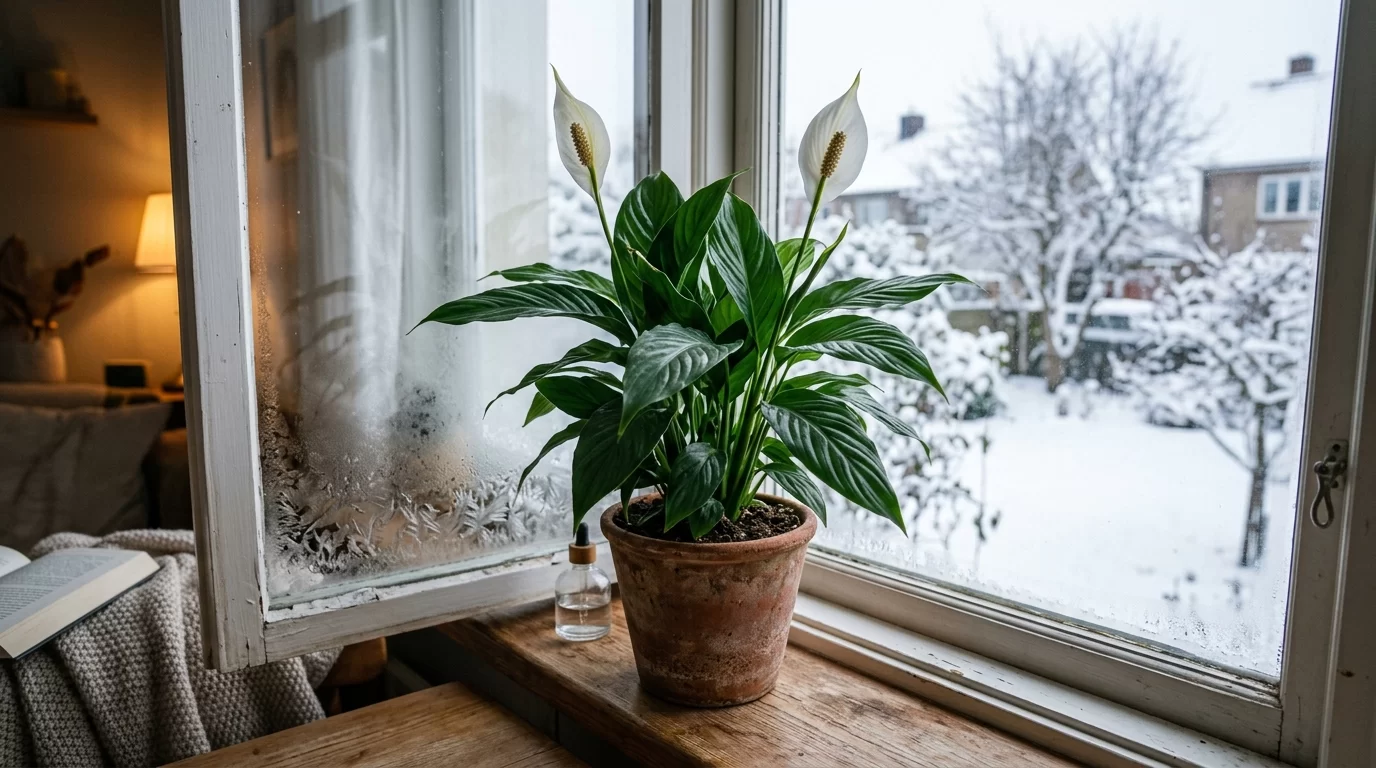
When autumn turns to winter, tropical houseplants undergo a subtle physiological shift. Among the most popular indoor specimens, the Peace Lily (Spathiphyllum) demands a noticeable shift in its care routine during these colder, darker months. Native to the warm, perpetually humid understories of Central and South American rainforests, this evergreen perennial is unequipped for cold drafts, dry radiator heat, and drastic drops in ambient sunlight.
Many plant parents panic when their usually vibrant Peace Lily slows its growth or drops its dramatic white spathes between November and March. However, understanding winter dormancy and adjusting light, watering, and ambient moisture will keep your plant robust and lush until spring warmth triggers fresh growth.
Understanding the Peace Lily's Winter Physiology
In tropical rainforests, temperature and day length remain relatively steady year-round. Indoors in temperate zones, winter introduces two dramatic stress factors: drastically diminished natural light and parched indoor air caused by central heating. As sunlight hours shrink, your Peace Lily reduces its photosynthetic rate, entering a phase of semi-dormancy or slowed development.
Because metabolic activity slows down, the plant draws up water at a fraction of its summer pace. Continuing a summer watering schedule during winter is the single fastest way to trigger lethal root rot. Successful winter care requires matching your physical inputs—water, light, and humidity—to the plant's diminished metabolic appetite.
1. Maximizing Winter Light Exposure
During spring and summer, a Peace Lily thrives in indirect, filtered light, as direct afternoon rays can scorch foliage. In winter, however, light intensity drops significantly, and days become much shorter. Consequently, your plant may struggle to receive basic lighting needs if kept in its warm-weather spot.
- Relocate closer to windows: Shift your Peace Lily to an eastern or southern windowsill where it can capture maximum indirect daylight.
- Mind the windowpane chill: While placing the plant nearer a window helps, ensure the leaves never press directly against freezing glass, as frost contact destroys foliage tissue within hours.
- Clean the leaves regularly: Winter dust accumulation on broad leaves blocks valuable photons. Wipe down each leaf with a damp, soft microfiber cloth every two weeks to keep stomata clear and maximize photosynthetic surface area.
- Consider supplemental lighting: If your space lacks bright natural light, position a full-spectrum LED grow light 12 to 18 inches above the canopy for 8 to 10 hours daily.
2. Redefining Your Watering Routine
Overwatering is the primary cause of Peace Lily failure during winter. In warm months, these plants earned a reputation as water guzzlers due to their dramatic drooping when thirsty. In winter, that characteristic wilt occurs much less frequently—and if it does happen while the potting mix feels heavy and damp, it signals root rot rather than dehydration.
How to Water Safely in Winter
- Test moisture depth before pouring: Insert your finger 2 to 3 inches into the potting medium. If you feel any dampness or cool moisture, withhold water and check again in two or three days.
- Use lukewarm, rested water: Never pour freezing cold tap water into the pot. Cold water shocks delicate feeder roots, triggering leaf yellowing and dieback. Let tap water sit at room temperature overnight, which also allows dissolved chlorine to dissipate.
- Drain thoroughly: Always empty saucer water within 15 minutes of watering. Never allow the container base to sit in stagnant runoff, which starves roots of necessary oxygen.
3. Combatting Dry Indoor Heating and Low Humidity
While reduced watering protects underground roots, dry air caused by forced-air furnaces, radiators, and space heaters attacks leaves above ground. Peace Lilies prefer relative humidity levels between 50% and 60%. Winter home heating frequently drops interior humidity below 30%, leading to dry, crispy brown tips and brittle foliage.
Effective Humidity Solutions
- Deploy a cool-mist room humidifier: Operating a small humidifier nearby is the most effective method for maintaining ideal ambient humidity throughout cold months.
- Build a gravel tray: Fill a shallow tray with clean pebbles and pour water halfway up the stones. Set your potted Peace Lily atop the pebbles, ensuring the bottom drainage holes remain elevated above standing water to prevent root saturation.
- Group tropical foliage together: Cluster your Peace Lily alongside companion plants like the Golden Pothos, ZZ Plant, or Snake Plant. Transpiration from multiple plants creates a localized microclimate with elevated ambient moisture.
- Avoid direct heat blasts: Position your plant at least six feet away from active heat vents, radiators, wood stoves, and fireplaces.
4. Temperature Management and Draft Protection
Peace Lilies are strictly cold-sensitive. They prefer consistent ambient temperatures between 65°F and 80°F (18°C–27°C). Dropping below 55°F (13°C) damages cell structure, while freezing temperatures prove fatal.
Watch out for localized drafts that human skin might miss. Cold air sneaks through uninsulated window frames, exterior entryways, and unheated hallways. At the same time, dry hot air blasts from floor registers. Keep ambient room temperatures steady, avoiding sudden fluctuations between day and night.
5. Pause Fertilization and Delay Repotting
One common winter mistake is continuing to apply synthetic fertilizers. Because your Peace Lily is not actively generating new leaf growth or blooming, unused mineral salts build up in the soil matrix. This concentration burns tender root tips, resulting in blackened leaf margins.
- Halt fertilizer applications: Stop feeding entirely from late autumn until early spring (roughly late October through March). Resume feeding with a balanced, diluted liquid fertilizer when you notice fresh leaf spikes in spring.
- Postpone repotting: Root systems need strong active growth to recover from soil disturbance and root division. Avoid repotting or root pruning in winter unless treating severe root rot emergency cases.
Troubleshooting Common Winter Peace Lily Problems
1. Leaves Curling and Tips Turning Brown
Crispy, brown leaf tips during winter usually point to low atmospheric humidity or excess mineral accumulation from tap water and historical fertilizer application. Trim away dead, brown tips using sharp, sterilized shears, following the natural pointed shape of the leaf. Boost local humidity immediately.
2. Severe Drooping in Damp Soil
If your Peace Lily is drooping heavily but the potting medium feels wet, do not add more water. This indicates impaired roots that can no longer transport moisture upward. Unpot the plant gently, inspect the root ball, clip away black or slimy decay, dust remaining roots with cinnamon or horticultural fungicide, and repot into fresh, well-draining soil mixed with perlite.
3. Lower Leaves Turning Bright Yellow
A few aging bottom leaves yellowing over the course of a winter is normal foliage turnover. However, rapid, widespread yellowing across young and old leaves points directly to wet soil conditions coupled with cold root temperatures.
Frequently Asked Questions
Can a Peace Lily bloom in winter?
While Peace Lilies occasionally produce white spathes during winter under artificial grow lights, natural winter blooming is rare. The plant typically conserves energy during reduced daylight hours, saving flower production for spring and summer peak growth.
Should I mist my Peace Lily leaves daily in winter?
Misting offers temporary humidity spikes that vanish within minutes. Frequent misting can also foster fungal leaf spots if airflow is poor. Utilizing a room humidifier or pebble tray yields far more consistent, safer moisture levels.
Why are my Peace Lily's leaves turning black?
Black leaf patches usually stem from cold damage (exposure to sub-50°F drafts or window contact) or severe root rot resulting from standing water. Move the plant to a warmer location and adjust your watering routine.
Spring Transition: What to Do Next
As day length increases in mid-to-late March, your Peace Lily will slowly awaken from its winter rest. When you spot vibrant green shoots emerging from the crown, gradually increase watering frequency, resume monthly balanced feeding, and consider repotting if the plant has grown root-bound. By offering protection against cold and dry air during winter, your Peace Lily will enter spring healthy, robust, and ready to bloom.