Epipremnum aureum
Golden Pothos
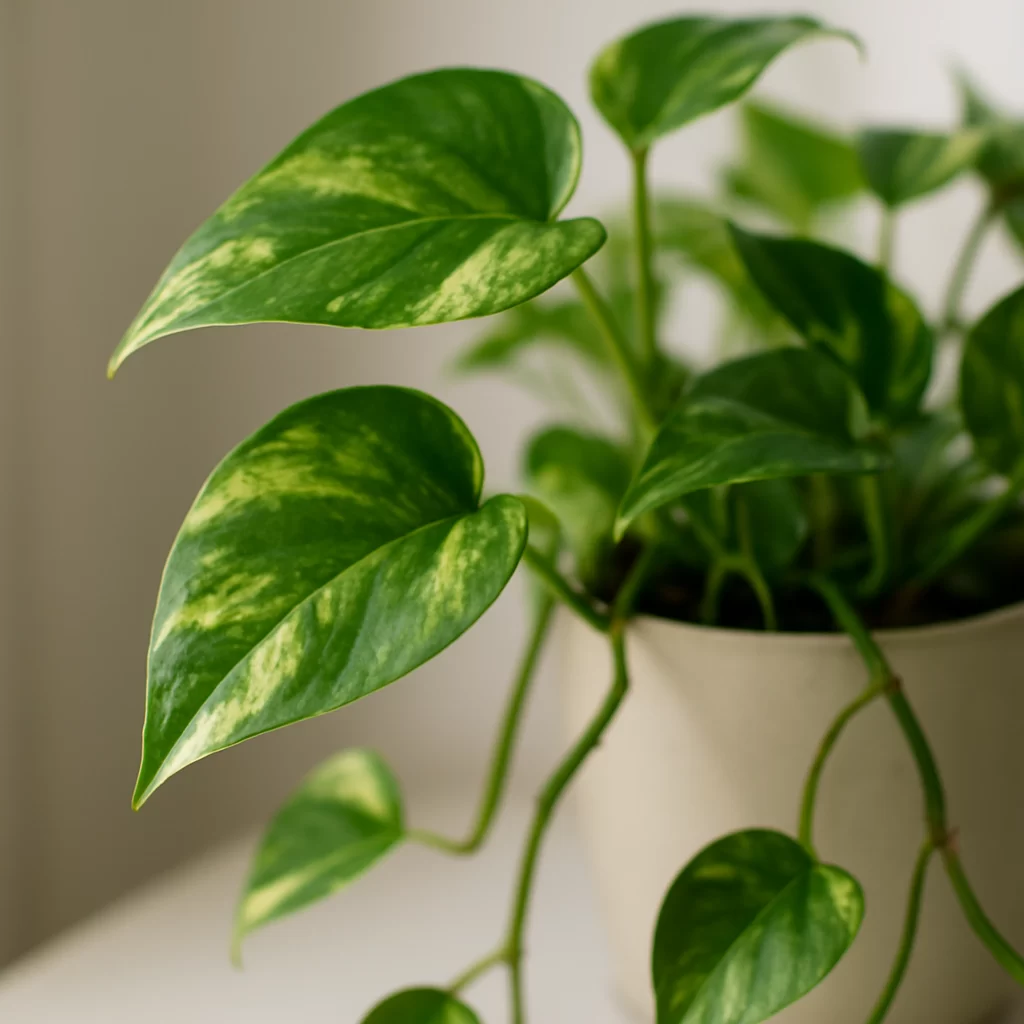
A popular, easy-care trailing tropical houseplant known for vigorous growth and variegated leaves.
- Difficulty
- Easy
- Environment
- Indoor & outdoor
- Watering
- Allow top few centimeters to dry between waterings.
- Sunlight
- Bright indirect light; tolerates low light.
- Soil
- Well-draining, rich potting mix with perlite.
- Humidity
- Prefers moderate to high humidity.
- Temperature
- Warm indoor temperatures; avoid cold drafts.
- Toxicity
- Toxic if ingested; causes oral irritation.
- Growth habit
- Evergreen vining/trailing climber; vigorous under good light.
- Bloom season
- Rarely flowers in cultivation; uncommon indoors.
- Native region
- Native to Mo'orea; naturalized in tropical regions.
Overview
Golden Pothos (Epipremnum aureum) is a popular, easy-care tropical houseplant appreciated for its trailing vines and attractive variegated leaves. It thrives in a range of indoor conditions and is commonly used in hanging baskets and on shelves.
Its vigorous growth and tolerance of low light make it a favorite for beginners and busy plant owners. Variegated cultivars need brighter indirect light to maintain their patterns.
Light and Water
Bright indirect light encourages growth and variegation; tolerates low light with slower growth. Avoid prolonged direct midday sun to prevent leaf scorch.
Allow the top few centimeters of potting mix to dry between waterings. Reduce watering in cooler or low-light periods to prevent root rot.
Soil, Temperature and Humidity
Use a well-draining potting mix rich in organic matter, such as peat- or coco-based mixes with perlite or bark. Slightly acidic to neutral pH is ideal.
Prefers warm indoor temperatures and moderate to high humidity. Protect from cold drafts and temperatures near freezing.
Fertilizing and Pruning
Feed lightly during spring and summer with a balanced houseplant fertilizer, and reduce feeding in fall and winter. Overfertilizing can cause salt buildup and leaf burn.
Prune regularly to control size, promote bushier growth, and remove damaged foliage. Train vines on supports or trim for a fuller appearance.
Propagation
Propagate easily by stem cuttings with at least one or two nodes; roots readily in water or directly in moist potting mix. Cuttings can be taken year-round in active growth.
Use clean, sharp scissors and allow cut ends to callus briefly before planting if rooting in soil to reduce rot risk.
Common Problems
Yellow leaves often indicate overwatering or root issues; check drainage and adjust watering. Brown leaf edges can signal low humidity or inconsistent watering.
- Pests: mealybugs, scale, spider mites.
- Diseases: root rot from overwatering.
- Variegation loss: low light may cause reversion to solid green.
beginners easy-care toxic trailing tropical variegated vining