Dracaena trifasciata
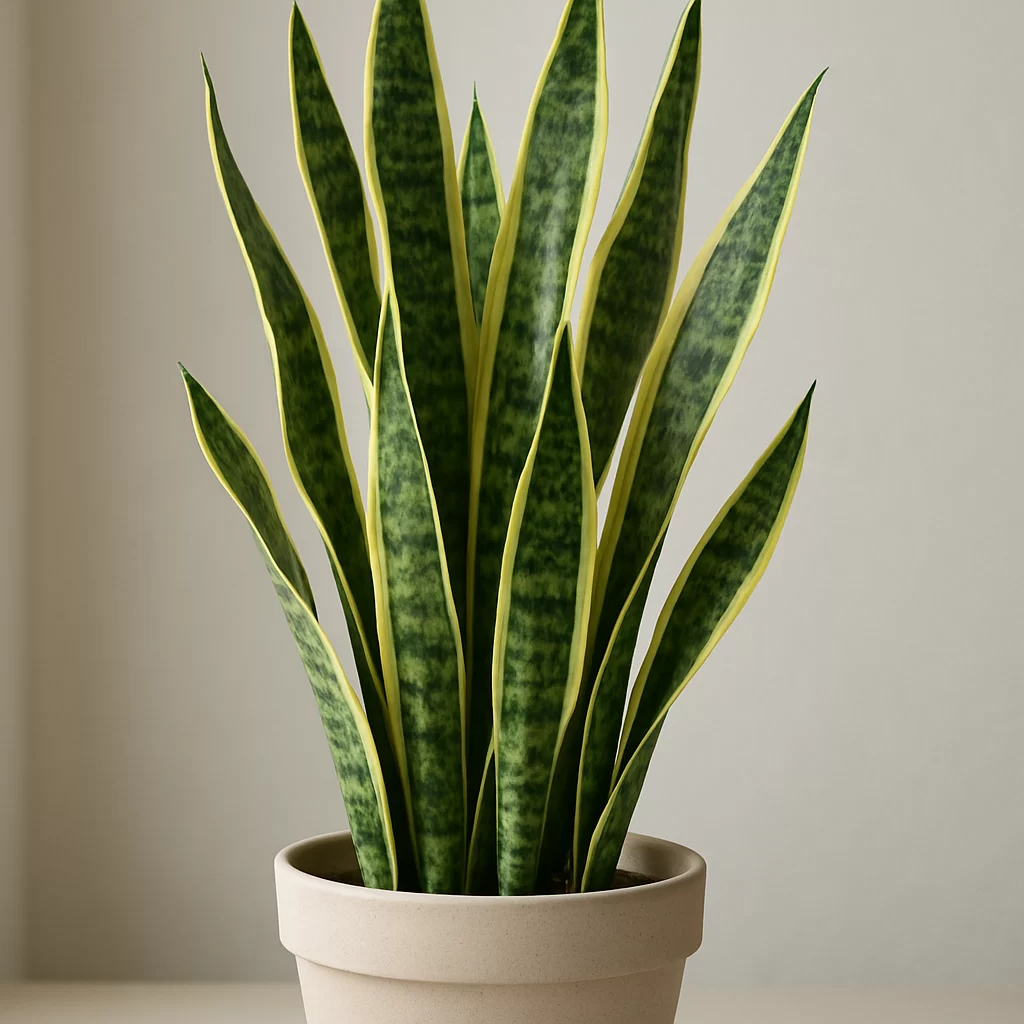
Snake Plant (Mother-in-law's tongue)
A hardy, low-maintenance evergreen known for upright sword-shaped leaves and drought tolerance.
- Difficulty
- Easy
- Environment
- Indoor & outdoor
- Watering
- Infrequent; allow potting mix to dry between waterings.
- Sunlight
- Tolerates low light; prefers bright, indirect light.
- Soil
- Well-draining, airy mix; cactus mix or perlite amended.
- Humidity
- Low to moderate; average indoor humidity is adequate.
- Temperature
- Prefers warm conditions; avoid frost and freezing.
- Toxicity
- Toxic if ingested to pets and humans.
- Growth habit
- Upright, sword-shaped leaves from rhizomes; forms clumps.
- Bloom season
- Rarely flowers; small fragrant tubular blooms in late winter.
- Native region
- Tropical West Africa (e.g., Nigeria).
Overview
Dracaena trifasciata, commonly called the Snake Plant or Mother-in-law's tongue, is a popular evergreen houseplant prized for its architectural, upright foliage. It forms clumps of sword-shaped leaves that arise from rhizomes and spreads slowly by division.
Extremely tolerant of neglect and a wide range of light conditions, the Snake Plant is well-suited to beginners and low-light interiors. It is sometimes cited for indoor air-purifying properties, though real-world impact varies.
Light and Water
The Snake Plant tolerates low light but grows best in bright, indirect light. Avoid prolonged exposure to intense direct sun which can scorch leaves.
- Water sparingly; allow the soil to dry between thorough waterings.
- Reduce watering in cooler months to prevent root rot.
Soil, Temperature and Humidity
Use a well-draining, airy potting mix such as a cactus or succulent mix, or amend standard mix with perlite or grit. Good drainage is essential to avoid soggy roots.
Prefers warm indoor temperatures and is intolerant of frost; average home humidity is adequate. Protect from prolonged cold or freezing conditions.
Fertilizing and Pruning
Feed lightly during the growing season with a balanced, diluted houseplant fertilizer every 4–6 weeks. Avoid heavy feeding in winter when growth slows.
Prune only to remove dead or damaged leaves and to control size. Division of crowded clumps can rejuvenate older plants.
Propagation
Division of rhizomes or pups is the fastest and most reliable propagation method. Leaf cuttings can also work but are slower.
- Separate rhizomes with a clean tool and repot divisions immediately.
- Allow cut surfaces to callus briefly before planting to reduce rot.
Common Problems
The main risk is overwatering and poor drainage, which lead to root rot and soft, yellowing leaves. Signs of distress often include mushy roots and collapsed foliage.
Common pests include mealybugs, scale, and spider mites; inspect leaves regularly and treat infestations early with appropriate methods.
air-purifying beginner-friendly drought-tolerant low-light pet-toxic