Spathiphyllum wallisii
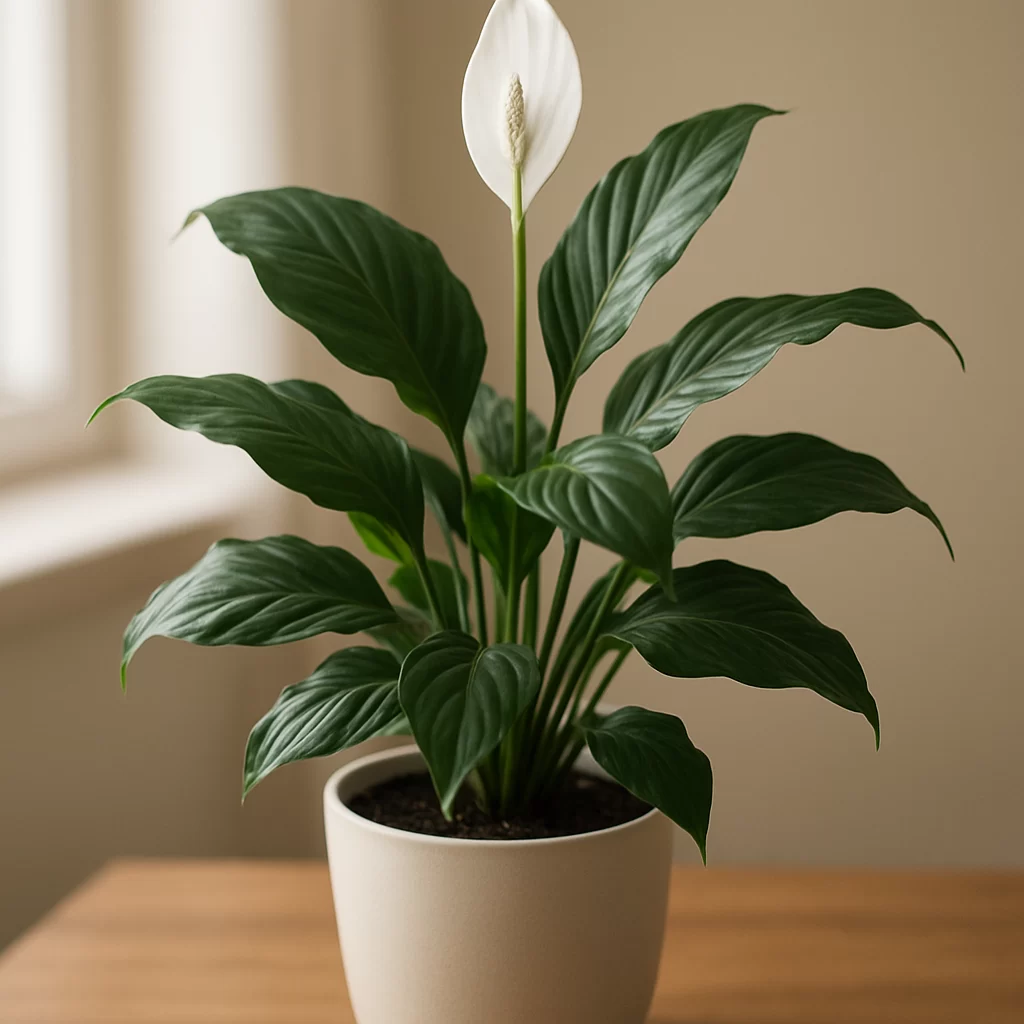
Peace Lily
A compact, easy-care indoor flowering plant with glossy leaves and white spathes; great for low-light spots.
- Difficulty
- Easy
- Environment
- Indoor
- Watering
- Keep soil evenly moist; allow top 1–2 cm to dry.
- Sunlight
- Bright indirect light; tolerates low light but flowers less.
- Soil
- Well-draining, fertile mix with peat or coco and perlite.
- Humidity
- Prefers higher humidity; mist or use a humidifier.
- Temperature
- 65–85 F (18–29 C); avoid below 60 F (15 C).
- Toxicity
- Toxic if ingested; contains calcium oxalate crystals.
- Growth habit
- Clumping perennial with upright glossy leaves and white spathes.
- Bloom season
- Late spring to summer; may bloom year-round indoors.
- Native region
- Tropical rainforests of Colombia and nearby regions.
Overview
Peace Lily (Spathiphyllum wallisii) is a clumping tropical perennial prized for its glossy lanceolate leaves and elegant white spathes. It remains compact indoors, typically 30–60 cm tall, making it a popular houseplant.
This species tolerates lower light than many flowering plants and is often recommended for beginners and indoor collections. It is also known for occasional blooms throughout the year under steady conditions.
Light and Water
Bright, indirect light produces the best blooms; it tolerates low light with reduced flowering. Avoid direct midday sun which can scorch the leaves.
Keep soil evenly moist but not waterlogged; allow the top 1–2 cm to dry between waterings. Reduce watering slightly in cooler months.
Soil, Temperature and Humidity
Use a well-draining, fertile potting mix rich in organic matter, such as peat or coco coir blended with perlite. Good drainage prevents root rot.
Prefers warm indoor temperatures around 65–85 F (18–29 C) and should be kept above about 60 F (15 C). Higher humidity benefits the plant and reduces brown leaf tips.
Fertilizing and Pruning
Feed with a balanced liquid fertilizer at half to full strength about once a month during the growing season (spring–summer). Cut back on feeding in fall and winter.
Remove spent flowers and yellow or damaged leaves to maintain appearance and encourage healthy new growth. Repot every 1–2 years if rootbound.
Propagation
Propagation is most commonly done by division at repotting time. Separate healthy clumps with roots and stems into smaller sections.
Ensure each division has roots and several leaves, then plant in fresh potting mix and keep evenly moist until established.
Common Problems
Overwatering can cause yellowing lower leaves and root rot; ensure proper drainage and adjust watering. Brown leaf tips often indicate low humidity, water quality issues, or salt buildup.
Pests such as spider mites, mealybugs, and scale can appear; treat infestations early with appropriate measures. Use filtered or rested tap water to reduce fluoride/chlorine damage.
flowering indoor peace-lily pet-toxic spathiphyllum tropical