Ficus elastica
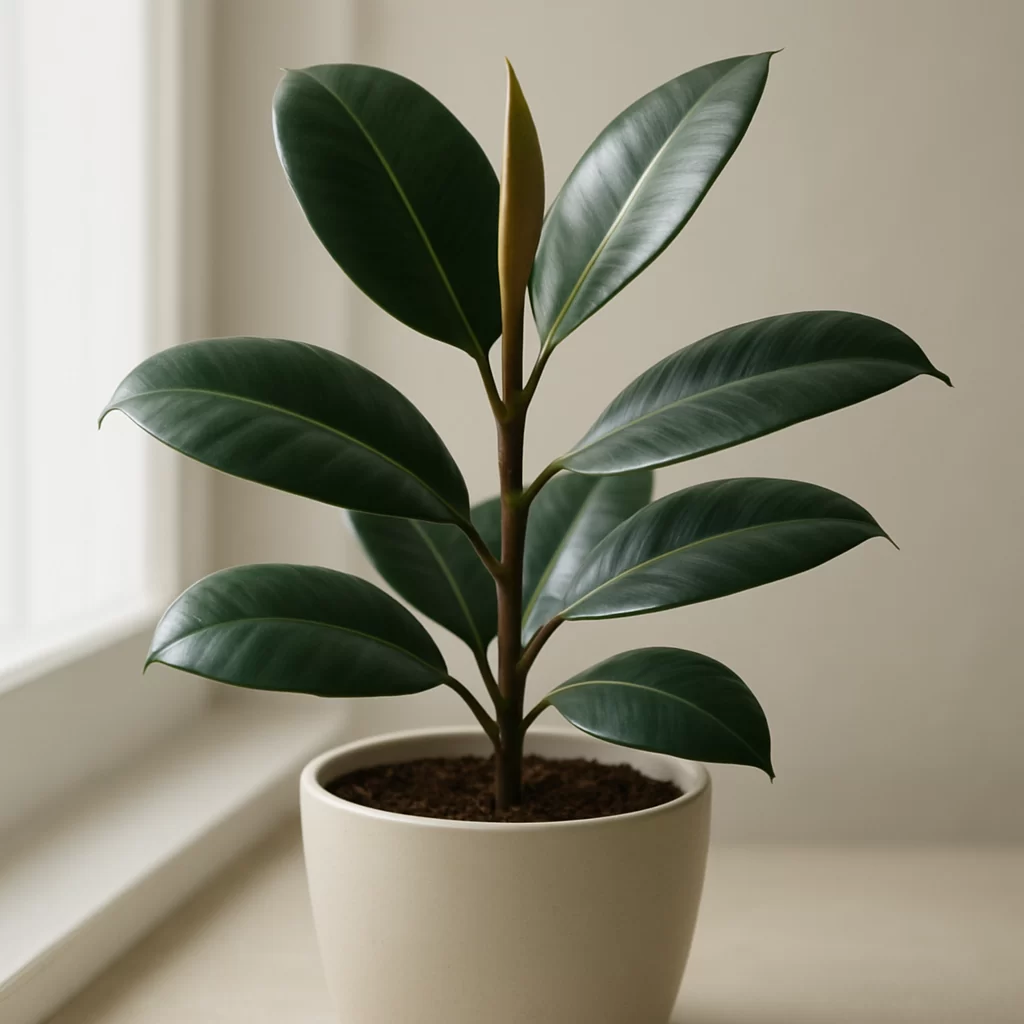
Rubber Plant
Evergreen tree commonly grown indoors for large glossy leaves; moderately easy care.
- Difficulty
- Moderate
- Environment
- Indoor & outdoor
- Watering
- Allow topsoil to dry slightly between waterings.
- Sunlight
- Bright indirect light to partial sun.
- Soil
- Well-draining, organic-rich potting mix.
- Humidity
- Prefers moderate to high humidity.
- Temperature
- Prefers warm 15-25°C; avoid below 10-12°C.
- Toxicity
- Mildly toxic if ingested; sap irritant.
- Growth habit
- Evergreen tree/shrub with large glossy leaves.
- Bloom season
- Rarely flowers indoors; outdoor fig production possible.
- Native region
- Eastern India through Southeast Asia.
Overview
Ficus elastica, commonly called the Rubber Plant, is an evergreen tree native to eastern India and Southeast Asia. It is grown indoors for its large glossy leaves and architectural form.
Often kept as a single-stem tree or multi-stemmed specimen, it adapts well to container life and is valued for foliage rather than blooms. Variegated cultivars need brighter light to maintain their coloration.
Light and Water
Bright indirect light to partial sun suits Ficus elastica; it tolerates moderate shade but may grow slowly in low light. Avoid prolonged hot direct afternoon sun which can scorch leaves.
Allow the topsoil to dry slightly between waterings; keep soil evenly moist but avoid waterlogged conditions. Reduce frequency in cooler or lower-light periods to prevent root issues.
Soil, Temperature and Humidity
Use a well-draining, aerated potting mix rich in organic matter, such as peat or coco coir mixed with perlite or bark. Good drainage helps prevent root rot and supports healthy growth.
Keep plants warm, ideally between 15-25°C, and avoid prolonged exposure below about 10-12°C or cold drafts. Prefers moderate to high humidity but tolerates average indoor humidity.
Fertilizing and Pruning
Feed with a balanced fertilizer during the active growing season to support steady growth; follow product instructions and reduce feeding in winter. Regular feeding helps maintain leaf size and vigor.
Prune to control height and encourage branching; cut above nodes to stimulate shoots. Wear gloves when pruning to avoid contact with the sap, which can irritate skin.
Propagation
Propagate by semi-ripe stem cuttings or by air layering; both methods are commonly used and effective. Keep cuttings warm and humid until roots form.
Use a sterile, well-draining medium and consider a rooting hormone to improve success. Transplant once roots are established and monitor for signs of stress.
Common Problems
Pests include scale, mealybugs, and spider mites; inspect leaves and stems regularly and treat infestations early. Wiping leaves periodically removes dust and improves light capture.
- Overwatering: can cause root rot and leaf drop.
- Poor light: leads to leggy growth and loss of variegation.
- Sap: can irritate skin and stain surfaces; handle with care.
air-purifying ficus-elastica houseplant rubber-plant tropical variegated