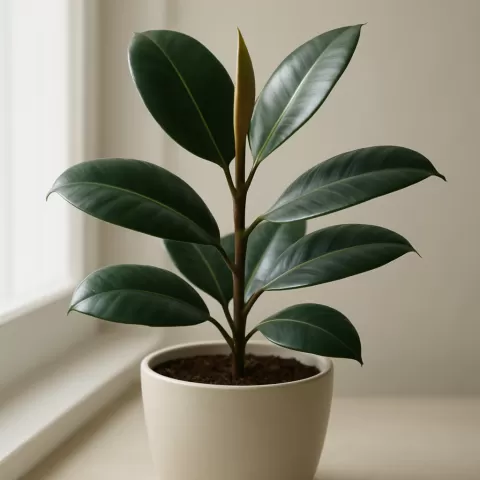
Ficus lyrata
Fiddle Leaf Fig
A popular indoor tree with large, glossy, fiddle-shaped leaves; prefers bright, indirect light and moderate humidity.

- Difficulty
- Moderate
- Environment
- Indoor & outdoor
- Watering
- Allow top soil to dry slightly between waterings.
- Sunlight
- Bright indirect light; avoid harsh afternoon sun.
- Soil
- Well-draining aerated potting mix with perlite.
- Humidity
- Prefers moderate to high humidity.
- Temperature
- Warm; protect from cold drafts.
- Toxicity
- Toxic if ingested; sap can irritate skin.
- Growth habit
- Upright tree with large fiddle-shaped leaves.
- Bloom season
- Rarely flowers indoors; may fruit outdoors.
- Native region
- West Africa (tropical lowland forests)
Overview
Ficus lyrata, commonly called the Fiddle Leaf Fig, is valued for its dramatic, large, violin-shaped leaves and upright habit. It often becomes a focal point in interior spaces when grown as a single-trunk specimen or multi-stem tree.
While striking, this plant can be sensitive to changes in light, water, and drafts, so consistent placement and care help it thrive and develop a tree-like form indoors.
Light and Water
Fiddle Leaf Figs do best in bright, indirect light and tolerate some morning sun; avoid harsh afternoon sun that can scorch leaves. Low light often leads to leaf drop and slow growth.
Water thoroughly, then allow the top layer of soil to dry slightly before the next watering. Overwatering can cause yellowing leaves and root rot, while prolonged drought causes browning and leaf drop.
Soil, Temperature and Humidity
Use a well-draining, aerated potting mix that includes peat or coco coir with perlite or pumice for good drainage. Neutral to slightly acidic pH is preferred.
Keep the plant in warm indoor temperatures and protect it from cold drafts and sudden temperature changes. It prefers moderate to high humidity and benefits from occasional misting or a nearby humidifier in dry indoor environments.
Fertilizing and Pruning
Feed monthly during the growing season with a balanced, water-soluble fertilizer at half strength. Reduce feeding in fall and winter when growth slows.
Prune to control height, shape, and to encourage branching. Wipe or dust leaves periodically to maintain photosynthesis and inspect for pests.
Propagation
Fiddle Leaf Figs are commonly propagated by stem cuttings taken from healthy, semi-ripe wood. Take cuttings with at least one node and root in water or a moist, well-draining medium.
Allow cuttings to callus briefly, keep them warm and humid, and expect roots to form over several weeks with consistent care.
Common Problems
Leaf drop, brown spots, or yellowing often indicate improper watering, low light, or drafts. Sudden changes in environment can trigger leaf loss.
- Pests: Watch for scale, mealybugs, and spider mites; treat promptly.
- Root rot: Avoid waterlogged soil and poor drainage.
- Leaf scorch: Move away from direct hot afternoon sun.
ficus-lyrata fiddle-leaf-fig indoor-tree toxic tropical