Monstera deliciosa
Swiss Cheese Plant
A bold Central American climber with glossy, fenestrated leaves. Fast-growing indoors, dramatic in bright indirect light, and toxic to pets.
- Difficulty
- Easy
- Environment
- Indoor
- Watering
- Water when the top of the soil starts to dry; drain fully
- Sunlight
- Bright, indirect light; avoid harsh midday sun
- Soil
- Well-draining mix that stays lightly moist
- Humidity
- Medium to high; mist if indoor air is dry
- Temperature
- 18–24°C (65–75°F); keep above 18°C in winter
- Toxicity
- Toxic to pets and humans if ingested
- Growth habit
- Climbing evergreen with aerial roots
- Bloom season
- Midsummer outdoors in warm climates (rare indoors)
- Native region
- Central America
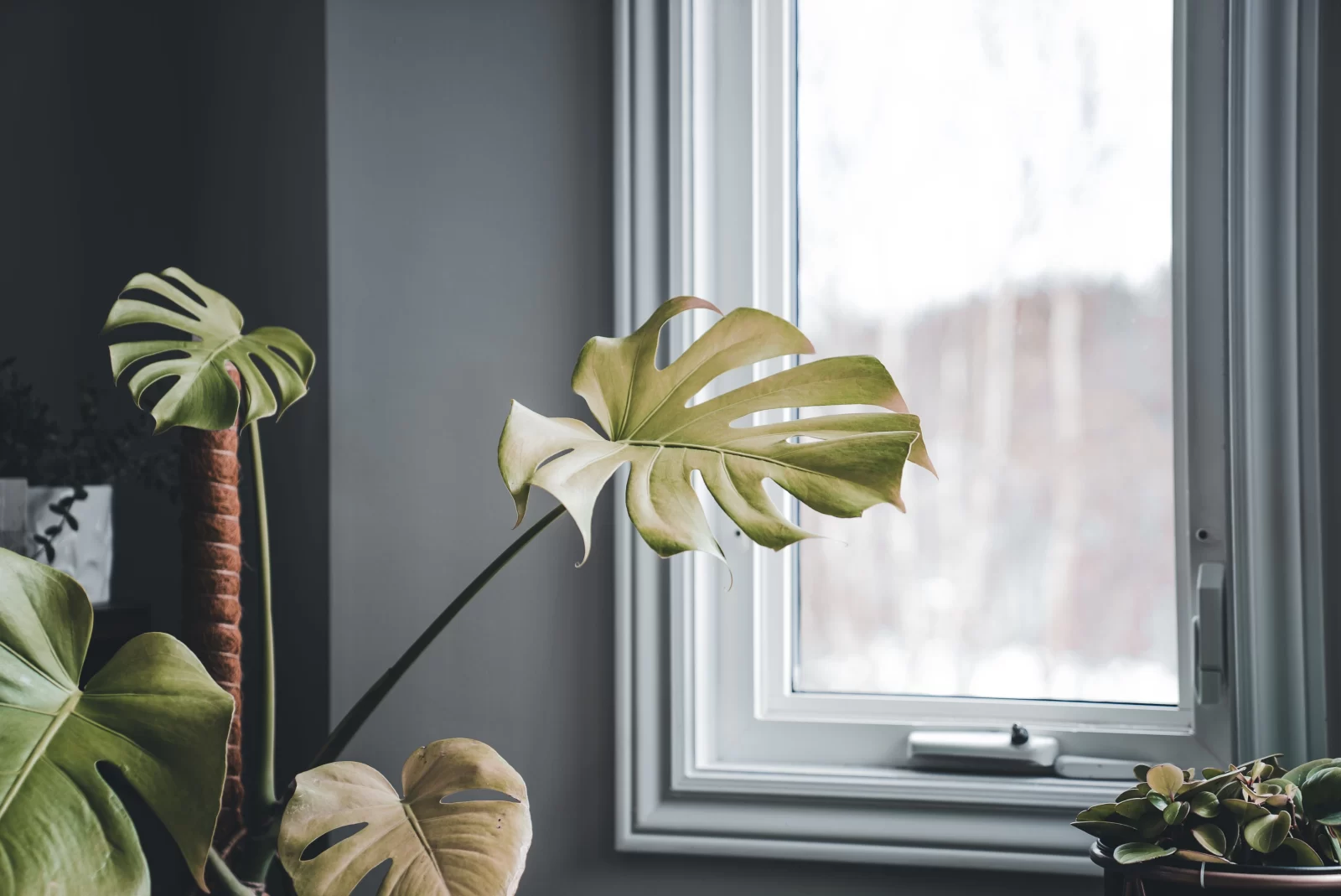
Monstera deliciosa is one of the most recognizable houseplants in the world. Native to Central American rainforests, it climbs with aerial roots and produces large, heart-shaped leaves that develop natural holes and splits as the plant matures.
Indoors, expect about 30–60 cm (1–2 feet) of growth each year when light, water, and humidity are balanced. Outdoors in a warm climate, it may flower and occasionally fruit—the fruit is often described as a mix of pineapple and banana—but fruiting is rare on houseplants. Keep Monstera away from pets and children who chew plants; the sap and plant parts are toxic if ingested.
Light and water
Give Monstera bright, indirect light. Hot direct sun can scorch leaves, while deep shade produces smaller foliage with fewer fenestrations. Water when the top of the soil starts to dry, then let excess drain fully. Do not leave the pot sitting in runoff. If indoor air is dry, mist with rainwater or distilled water.
Soil and climate
Use a well-draining mix that stays lightly moist, never soggy. Ideal temperatures are 18–24°C (65–75°F). Higher humidity keeps leaves lush; try not to let rooms drop below 18°C (65°F) in winter.
Feeding
During the growing season, apply a balanced liquid fertilizer every few weeks. Water until it drains from the pot, then discard the excess.
Pruning
Wear gloves—Monstera sap can irritate skin. Use sharp, clean shears. Spring is the best time to prune, when growth is active. Remove damaged leaves first, then cut above a node to shape the plant. Topping encourages denser growth; size control will need repeating because Monsteras keep growing.
Propagation
Stem cuttings: Cut a section with at least one node, preferably an aerial root, and two or more leaves. Root in water, refreshing every 3–5 days. When a root cluster forms, pot into fresh, well-draining soil and keep lightly moist.
Division: Best done while repotting. Gently separate a rooted section from the parent and plant it in its own pot.
Repotting and support
Most plants outgrow their pots every two years or so. Move up only a few centimeters in diameter (for example, 21 cm to 24 cm). Choose a pot with drainage holes and add a moss pole early. Fill the bottom third with mix, set the pole, settle the roots, backfill, and train aerial roots onto the support.
Pests and problems
Wipe leaves to remove dust. Watch for mealybugs, aphids, thrips, scale, and spider mites; rinse foliage or use insecticidal soap if needed.
- Brown tips: usually dry soil or low humidity.
- Brown spots with yellow halos: often overwatering or fungal stress—let the mix dry more between waterings.
- Yellow leaves: often underwatering; oldest leaves yellow first.
- Wilting: too much or too little water; check roots for rot if the soil stays wet.
FAQ
Is Monstera easy to care for?
Yes as a houseplant. Outdoors it needs reliably warm, humid conditions.
Why does it have holes in the leaves?
Fenestrations help the leaf cover more area without extra tissue, improving light capture in forest understories.
Why do some plants split more than others?
Strong fenestration takes energy. More bright, indirect light usually means more dramatic splits.
beginner climbing fenestrated houseplant tropical