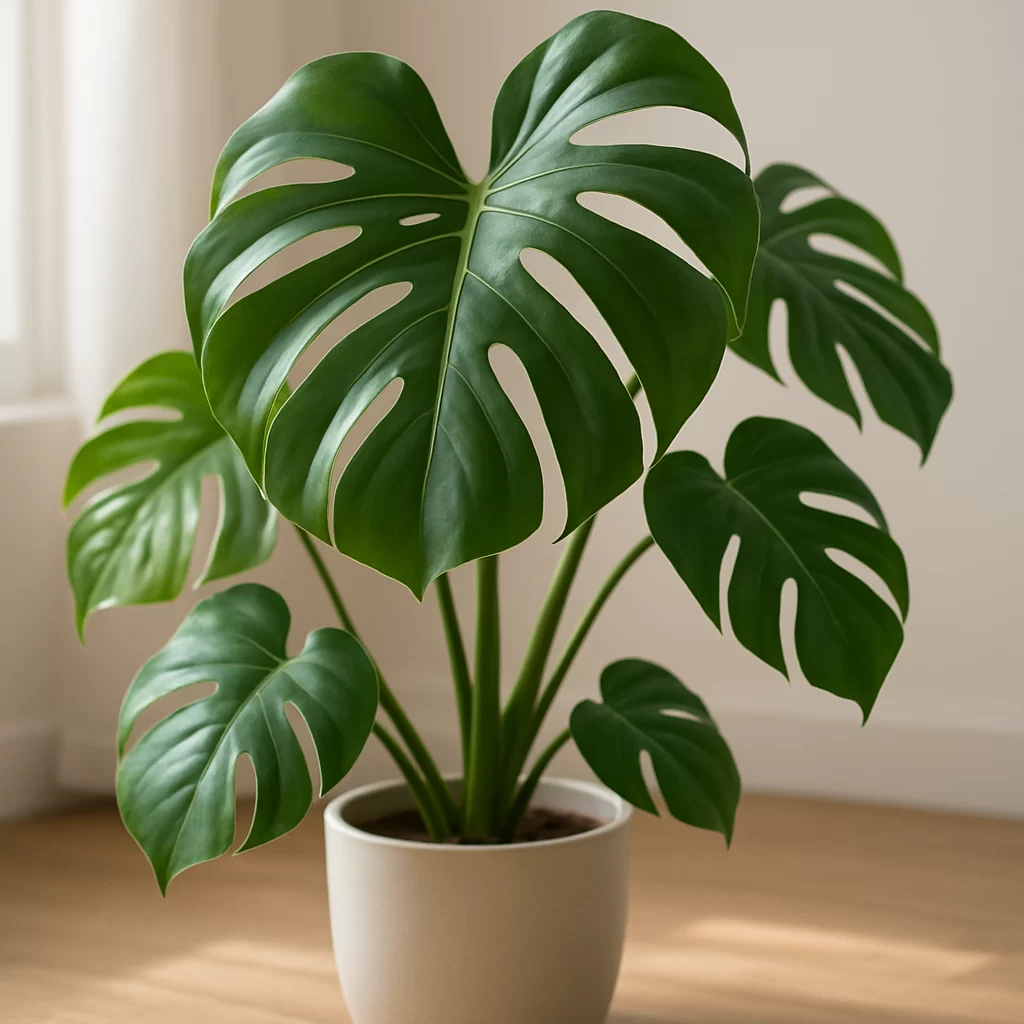
Monstera deliciosa
Swiss Cheese Plant
Popular tropical climber with large, fenestrated leaves; grown both indoors and outdoors in warm climates.
- Difficulty
- Moderate
- Environment
- Indoor & outdoor
- Watering
- Allow the top few centimeters of soil to dry between waterings.
- Sunlight
- Bright, indirect light; tolerates partial shade.
- Soil
- Well-draining aroid mix (peat or coir, bark, perlite).
- Humidity
- Prefers moderate to high humidity; tolerates average indoor humidity.
- Temperature
- Prefers 18–27°C; avoid temperatures below 10–12°C.
- Toxicity
- Toxic to pets and humans if ingested.
- Growth habit
- Aerial-rooted vining climber with fenestrated leaves.
- Bloom season
- Rarely flowers indoors; flowers and fruit outdoors when mature.
- Native region
- Tropical rainforests of southern Mexico through Central America.
Overview
Monstera deliciosa, commonly called the Swiss Cheese Plant, is a tropical aroid prized for its dramatic, split leaves and vining habit. It produces aerial roots and can climb supports, developing larger, fenestrated foliage as it matures.
Adaptable to indoor and sheltered outdoor conditions, Monstera is valued for statement foliage and moderate care requirements. Mature outdoor specimens may occasionally produce inflorescences and edible fruit in ideal tropical conditions.
Light and Water
Bright, indirect light is ideal to promote healthy growth and leaf fenestration; avoid hot, direct afternoon sun which can scorch foliage. In lower light the plant will grow more slowly and leaves may remain whole.
- Water: Allow the top few centimeters of soil to dry between waterings.
- Reduce watering frequency in cooler months to prevent waterlogging.
Soil, Temperature and Humidity
Use a well-draining, fertile aroid mix (peat or coir, bark, perlite) to retain moisture yet allow excess water to escape. Slightly acidic to neutral pH is preferred for best nutrient uptake.
- Temperature: Prefers warm conditions (approximately 18–27°C); avoid sustained cold or frost.
- Humidity: Prefers moderate to high humidity but tolerates average indoor levels; occasional misting or a humidifier helps.
Fertilizing and Pruning
Feed moderately during spring and summer with a balanced liquid or slow-release fertilizer to support vigorous growth and leaf development. Reduce or stop feeding in fall and winter when growth slows.
Prune to control size, remove damaged leaves, and encourage branching. Make clean cuts above nodes and consider training vines onto a moss pole to promote larger leaves.
Propagation
Propagation is commonly done by stem cuttings that include at least one node; cuttings root readily in water or directly in soil. Aerial roots on mature stems identify good cutting points.
- Root cuttings in water until roots form, then pot in a well-draining mix.
- Keep new cuttings warm and in bright, indirect light while establishing.
Common Problems
Overwatering can lead to root rot, while insufficient light limits leaf splitting and slows growth. Monitor for common pests like spider mites, mealybugs, and scale.
- Yellow leaves: often from overwatering or poor drainage.
- Brown edges: may indicate low humidity or sun scorch.
climber fenestrated houseplant indoor toxic tropical